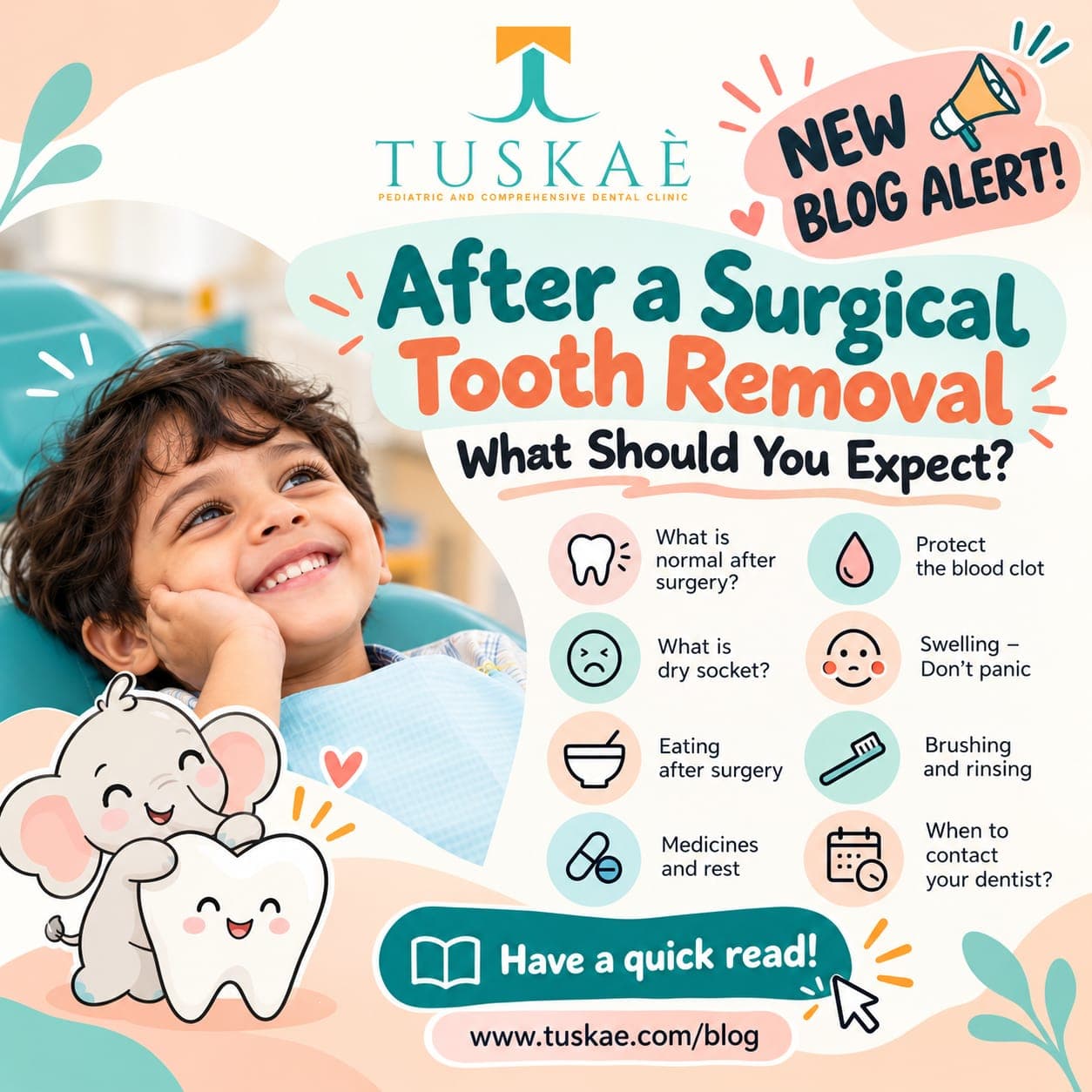
Surgical tooth removal doesn't end when the tooth is removed. Proper aftercare helps the blood clot remain undisturbed, reduces the risk of complications, and supports comfortable healing.
1. The First Few Hours — What Is Normal?
- Mild bleeding or oozing
- Feeling numb from local anaesthesia
- Mild soreness
- Bite gently on the gauze as instructed
- Avoid repeatedly spitting or disturbing the area
2. The Blood Clot Is Your Body's Natural Bandage
Avoid forceful spitting, gargling, drinking fluids via straw, and touching the clot with your tongue or fingers. If the initial clot dislodges, the socket can become exposed to the outside environment and get reinfected or become a painful dry socket.
3. What Is Dry Socket?
When the clot dislodges, the area becomes devoid of protection and hydration, which causes severe pain and swelling.
4. Swelling — Don't Panic
- Some swelling can be expected
- It may increase during the first couple of days before gradually settling
- Cold compresses may be advised during the early period
- Take prescribed medicines as directed
5. Eating After Surgery
- Start with soft, comfortable foods
- Avoid very hot foods/drinks while numb
- Chew away from the surgical area when possible
- Gradually return to normal food as comfort allows
6. Brushing and Rinsing
- Continue oral hygiene
- Be gentle around the surgical site
- Don't aggressively brush the wound
- Follow the dentist's instructions regarding mouth rinses
7. Stitches — What Happens to Them?
If the extraction area is stitched: for dissolvable stitches, keep the area clean and hygienic — they dissolve gradually. For non-dissolvable stitches, don't try to remove them prematurely; wait until the time period your dentist has advised, then have them removed by the dentist.
8. What Should You Avoid?
- Smoking/tobacco
- Alcohol
- Vigorous rinsing
- Spitting repeatedly
- Straws/suction
- Heavy exercise immediately after surgery
- Touching the wound with fingers or tongue
9. What Is Normal vs What Is Not?
Usually expected: mild pain, mild swelling, slight blood staining or oozing, and temporary difficulty opening the mouth, particularly after difficult procedures.
Contact your dentist if you notice:
- Bleeding that doesn't settle despite appropriate pressure
- Increasing rather than improving pain
- Significant or worsening swelling
- Fever or feeling unwell
- Pus or foul discharge
- Difficulty swallowing or breathing
- Persistent numbness or other unusual symptoms
10. Follow-Up Matters
Follow-up may be required depending on the type of extraction, sutures, infection, bone grafting or other procedures, healing, and the need for replacement of the missing tooth.
Every extraction has a healing journey. A little care during the first few days can make that journey much smoother. If something doesn't feel right, don't simply wait and worry—contact your dentist and get it checked.
Had a surgical tooth removal or been advised to undergo one? At Tuskaè, we believe in explaining the procedure, preparing you for recovery, and supporting you throughout the healing process.
Frequently Asked Questions
What is dry socket and how do I avoid it?
Dry socket happens when the protective blood clot in the extraction site dislodges, leaving the area exposed and causing severe pain and swelling. Avoid forceful spitting, gargling, drinking through a straw, smoking, and touching the area with your tongue or fingers to keep the clot intact.
What should I eat after a tooth extraction?
Start with soft, comfortable foods, avoid very hot foods or drinks while you're still numb, chew away from the surgical area when possible, and gradually return to normal food as comfort allows.
When should I contact my dentist after an extraction?
Contact your dentist if you notice bleeding that doesn't settle despite pressure, pain that is increasing rather than improving, significant or worsening swelling, fever or feeling unwell, pus or foul discharge, difficulty swallowing or breathing, or persistent numbness.
More from the Blog
View all

Connect With Our Specialists
For clinical inquiries or to schedule a visit for your family, reach out via our direct channels.